News
-
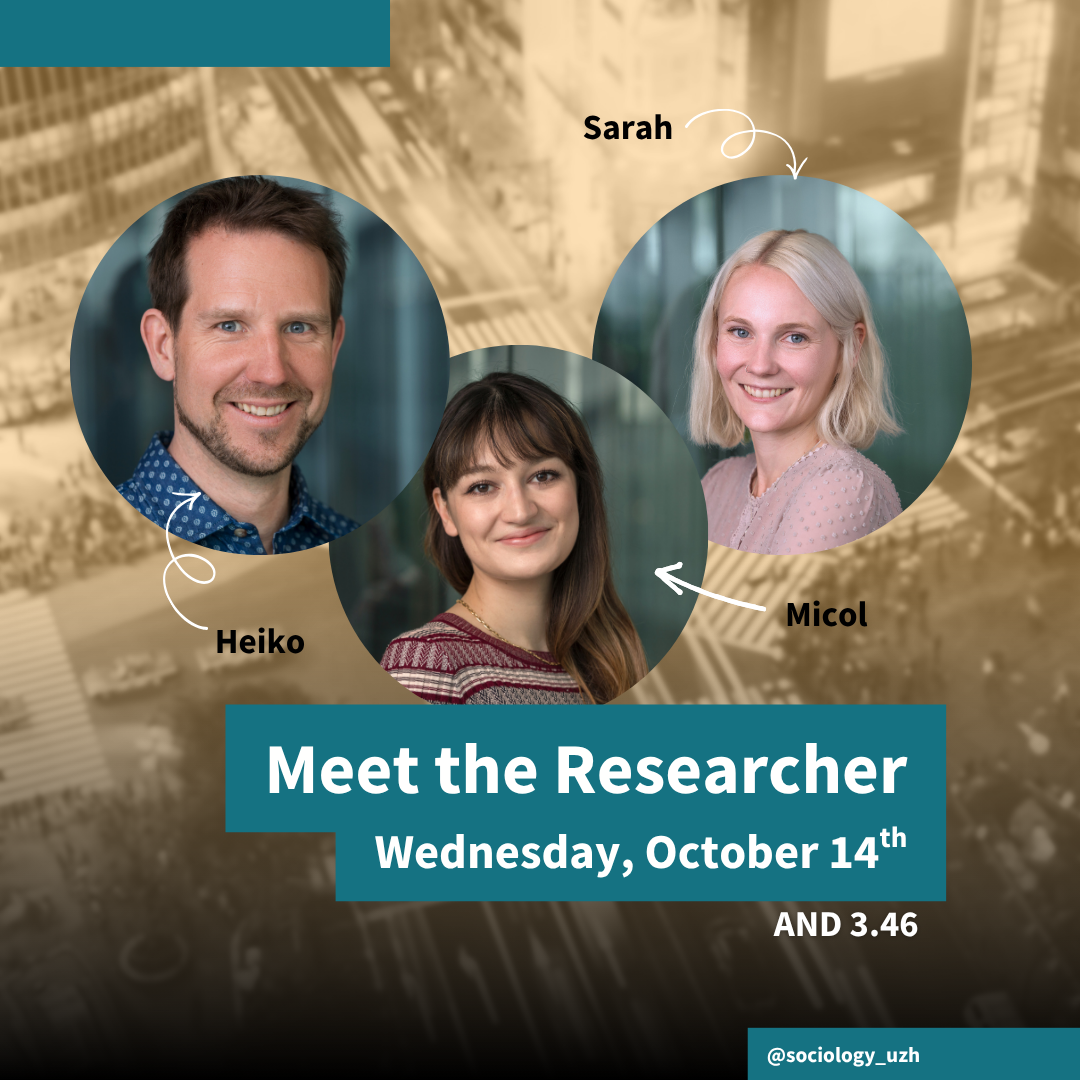
Meet the Researcher on October 14th with Heiko, Micol, and Sarah
The ongoing Meet the Researcher series brings together members of the faculty in an informal, collegial setting to exchange ideas and build connections. It is held at 12.00 in AND 3.46 and participants are invited to bring their own brownbag lunch.
-

Weltenblick – 60 Jahre Soziologie in Zürich | Folge 06 – Perspektiven entwickeln
Welche Perspektiven entwickeln Soziolog:innen nach Abschluss des Studiums? In dieser Folge erzählen Marc Herkenrath und Tabitha Gassner von ihrem Werdegang. Während sich Marc nach seinem Studium für eine Stelle beim entwicklungspolitischen Think Tank Alliance Sud entschied, ist Tabitha heute als Direktorin Soziale Einrichtungen und Betriebe Stadt Zürich eine der obersten Drogenverantwortlichen der Stadt.
-

🎤 SUZ Public Talks: «How Researchers Assess Publications, Data and Software Before (Re)Use» by Judith Hartstein
Join us for the public talk on «How Researchers Assess Publications, Data and Software Before (Re)Use» in the research colloquium at the SUZ.
📆 Tuesday, October 13th, 12:15-13:45
👤 Guest speakers: Dr. Phil. Judith Hartstein
📍 AND-4-06 (Lift A) -

Weltenblick – 60 Jahre Soziologie in Zürich | Folge 05 – Macht, Medien, Migration
In den 1990er-Jahren wurden Migration und Medien zu zentralen Themen des Instituts. Wie schon zuvor trugen Forscher:innen des SUZ dazu bei, polarisierte Debatten mit empirisch fundierten Argumenten zu versachlichen. Prägend waren dabei zwei Professoren: Hans-Joachim Hoffmann-Nowotny, einer der renommiertesten deutschsprachigen Migrationssoziologen, und Kurt Imhof, der damals in der Schweizer Öffentlichkeit präsent war wie kein anderer.
-

Research Grants for Isabel Raabe and Valentina Petrović
Two researchers from the Department of Sociology at the University of Zurich have recently secured research grants. Isabel Raabe has been awarded an ERC Starting Grant, while Valentina Petrović has received an SNSF Ambizione Grant. Both stipends are to support early career science researchers in their research endeavors.
-

Weltenblick – 60 Jahre Soziologie in Zürich | Folge 04 – Allein unter Männern
Zwar waren Studentinnen am SUZ von Anfang an präsent, doch Karriere am Institut machten Männer. Auch in der 1968er-Bewegung waren männliche Studenten Wortführer. Mit Marlis Buchmann erhielt 1990 erstmals eine Frau eine Professur für Soziologie, zunächst an der ETH, 1994 dann in einer 50-50-Aufteilung als Doppelprofessorin an der ETH und Universität Zürich. Folge 4 von «Weltenblick» ist nun auf deinem liebsten Podcastplayer oder auf suz.uzh.ch/podcast zu hören!
-

🎤 SUZ Public Talks: «When Do Policies Equalise Genetic Inequalities?» by Alicia García-Sierra
Join us for the public talk on «When Do Policies Equalise Genetic Inequalities? Towards a Theory of Equalising and Amplifying Institutions.» in the research colloquium at the SUZ.
📆 Tuesday, September 29th, 12:15-13:45
👤 Guest speakers: Prof. Dr. Alicia García-Sierra
📍 AND-4-06 (Lift A) -

Weltenblick – 60 Jahre Soziologie in Zürich | Folge 03 – Zwischen Korrelation und Revolution
Die Studierenden der ersten Generation waren genauso an der Uni anzutreffen wie auf der Strasse. Die frühe SUZ-Geschichte ist mit der 1968er-Bewegung eng verflochten, am Institut entstanden Studien zur Jugendbewegung, zur Wirtschaftsmacht grosser Schweizer Konzerne und zur Diskriminierung von Frauen. Die aktionsorientierte Forschung passte Erziehungsdirektor Alfred Gilgen jedoch nicht. Legendär sein Anruf am Institut mit der Forderung, das SUZ solle gefälligst «mehr Korrelation, weniger Revolution» machen. Das SUZ stand unter Beobachtung, viele Studierende und Forschende erfuhren später, dass sie bespitzelt worden waren.
-

Weltenblick – 60 Jahre Soziologie in Zürich | Folge 02 – Die Entdeckung der Weltgesellschaft
Im Podcast «Weltenblick – 60 Jahre Soziologie in Zürich» taucht die Journalistin und Soziologin Christina Caprez in die Geschichte der Soziologie in Zürich ein. Der Podcast ist ein Geschenk des Soziologischen Instituts der Universität Zürich (SUZ) zu seinem Jubiläum – sechs Jahrzehnte nach der Gründung im Jahr 1966.
-
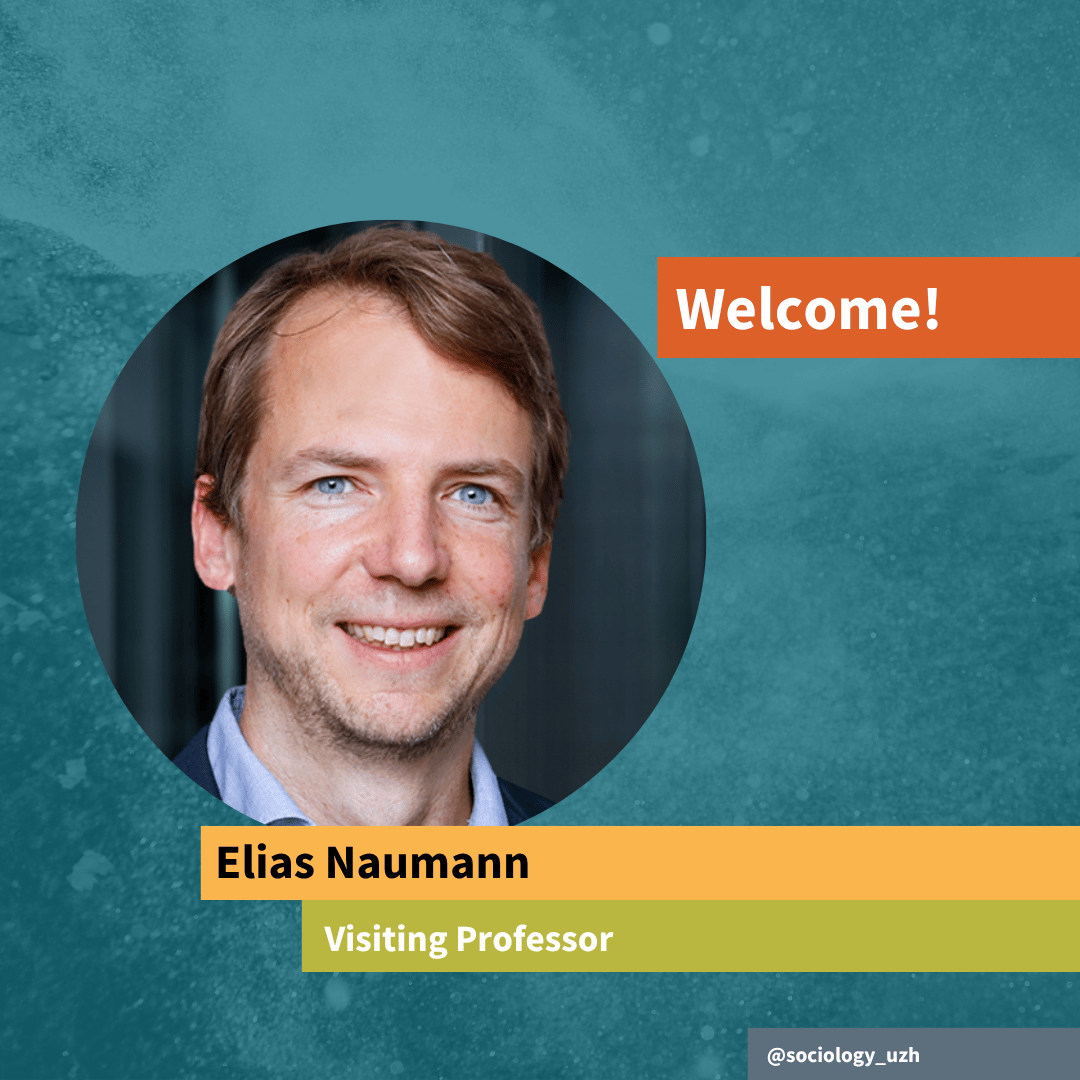
Welcome Elias Naumann
We are delighted to welcome Prof. Dr. Elias Naumann at the department as a visiting professor!